Last updated on:
Reading time:
8 min read
Best Framer Agency & SaaS Templates (Honest Picks for 2026)

Zakir Ullah
Official Framer Expert
TRUSTED BY 50+ FOUNDERS
Your design + build partner
Design, Framer development, migration and SEO — founder-led, for US and EU teams.
TABLE OF CONTENTS
SUMMARIZE THIS
ARTICLE WITH AI
A Framer template can save you three weeks or cost you a rebuild, and the difference is almost never how it looks in the preview. It is how it is built underneath — whether it is a system you can extend or a set of pages you can only edit.
TL;DR
Judge a template on component structure, not on the demo. Ask for the project file or a copy link.
Count the variants. Lots of components with variants is good; forty top-level frames is not.
Check the CMS collections match a content type you actually have.
Templates are a starting system, not a finished brand. Budget time to make it yours.
If your site is more than about fifteen pages or your brand is distinctive, custom is cheaper in the end.
What actually separates a good template from a pretty one
Component structure
Open the layers panel before you look at anything else. You want named, reused components with variants — one Button, one Card, one Section header, each used everywhere. What you do not want is a page built from unique frames, because then every design change is a manual edit repeated in a dozen places. This one check predicts more of your future pain than the entire visual design does.
Responsive behaviour under real content
Templates are built with demo copy that happens to fit. Replace a headline with one twice as long and see what happens at tablet width. Good templates use layout rules that adapt; weaker ones use fixed positions that were tuned to the demo text and break the moment your actual product name is longer.
CMS collections that match reality
Look at what collections exist and what fields they have. A blog collection with Title, Excerpt, Date, Category, and Content is built by someone who has shipped a site. A collection with fifteen fields including three unused image slots is built for a screenshot. Also check that the Title field is the first string field — that is what Framer generates slugs from, and getting it wrong is a migration to fix.
Style system, not hardcoded values
Colours and typography should be tokens and text styles, so rebranding is an hour rather than a week. If the template hardcodes hex values on individual layers, budget accordingly.
Categories worth buying, and what to expect from each
Agency and portfolio templates — usually the strongest structurally, because they are built by studios who use them. Expect good motion, and expect to replace all the imagery.
SaaS and product templates — the pricing and feature sections are often the reason to buy. Check the pricing table is a component with variants, not three separate cards.
Startup and landing-page templates — good value for a single high-quality page. Weaker when you need page number six.
Blog and editorial templates — the CMS structure matters more here than anywhere else. Check the detail-page template binds metadata to fields rather than typing it in.
What a template will not do for you
It will not give you a brand. A well-known template used with its default colours and fonts is recognisable to anyone who spends time in this ecosystem, and that includes some of your customers. Plan to change type, colour, spacing rhythm, and imagery — at which point you have kept the structure and replaced the surface, which is the correct way to use one.
It will also not give you content. Templates ship with copy that reads well because it says nothing. Replacing it is usually the longest part of the project and the part that determines whether the site works.
When custom is genuinely cheaper
Past roughly fifteen pages, or when your content has structure a template did not anticipate, or when your brand needs to look like nobody else's, the adaptation work exceeds the build. The tell is when you find yourself fighting the template's decisions more than using them — that usually happens around page eight, and by then you have paid for both.
What buying actually involves
Framer doesn't handle the transaction. Payment, pricing, and any refund goes through the individual creator, not Framer — so check their terms before you pay, because Framer support won't intervene if something goes wrong. After purchase you get a remix link by email; opening it copies the template into your own workspace as a normal project.
Licensing isn't standardized either. Some listings are single-use — the remix link is tied to one project and can't be duplicated for a second client — others are unlimited-use, letting you reuse the same purchase across projects. This is set per-listing by the creator, not by Framer, so read it before you buy if you plan to reuse a template across client work.
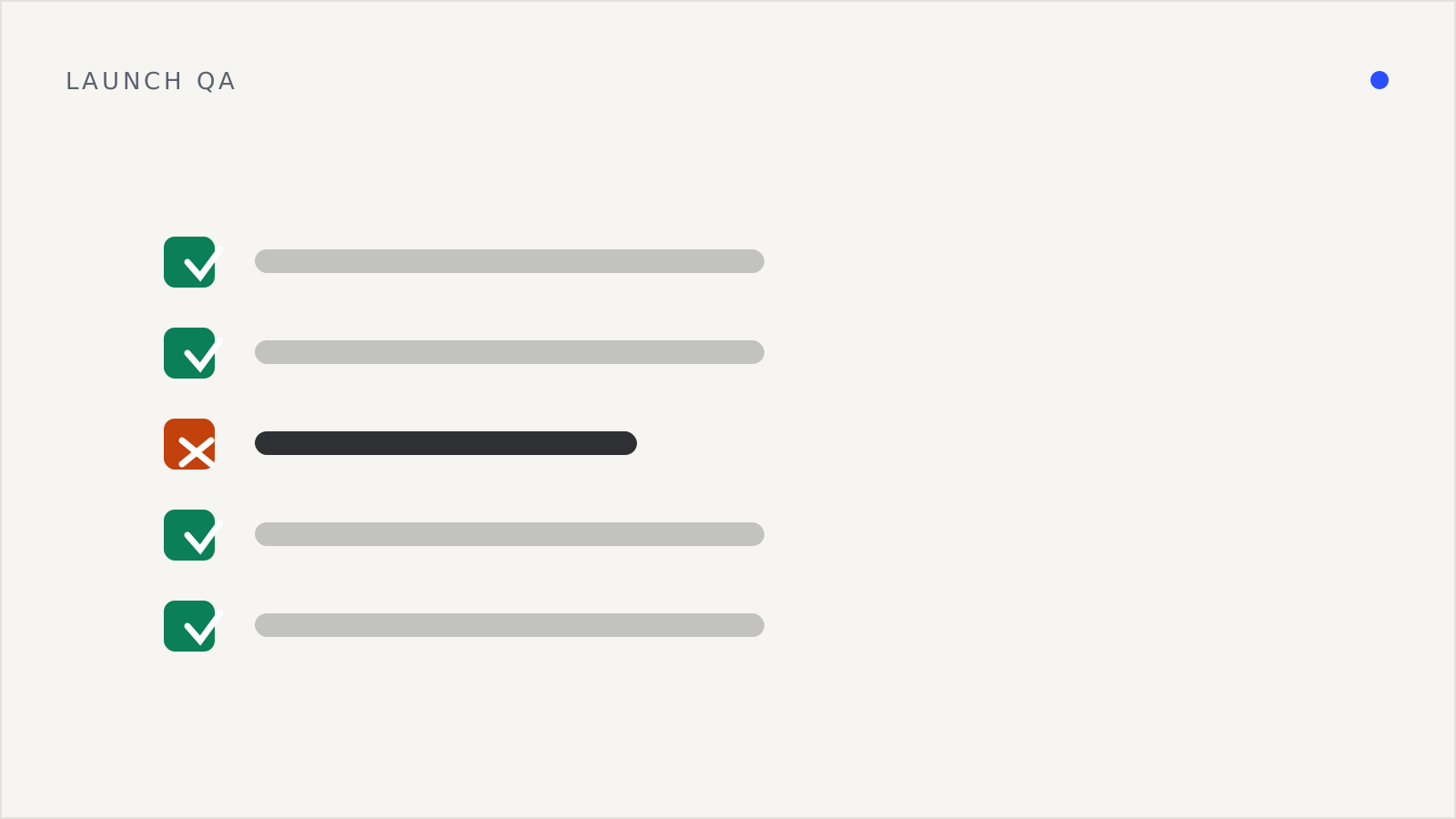
A short buying checklist
Can I see the project file or a duplicable copy before buying?
Are the main sections components with variants?
Do colours and type come from styles rather than hardcoded values?
Do the CMS collections match a content type I have?
Does it hold up at tablet width with longer copy?
Is there a page type I need that it does not include?
What to do next
Shortlist two or three, then judge them on the checklist rather than the preview. If more than two answers come back wrong, the template is a false economy. If you want a second opinion before committing, book a call — I will tell you honestly whether a template fits your project, including when it does and you should save the money.
WORKING ON THIS RIGHT NOW?
I run this exact process for US and EU teams — design, build, migration and the SEO work afterwards. Fixed quote in writing within three days.
NEED MORE INFO?
Frequently asked questions
How do I judge a Framer template before buying?
Open the layers panel, not the preview. Named components with variants used repeatedly means a system you can extend. A page built from unique frames means every design change is a manual edit repeated a dozen times.
Will people recognise that I used a template?
Some will, if you keep the default colours and fonts. Plan to change type, colour, spacing rhythm and imagery — keep the structure, replace the surface. That is the correct way to use one.
When is custom cheaper than a template?
Past roughly fifteen pages, or when your content has structure the template did not anticipate. The tell is finding yourself fighting the template's decisions more than using them, usually around page eight — by then you have paid for both.



Founder-led Framer studio by Zakir Ullah — Official Framer Expert & Creator. Design, build, migrate, maintain and grow — led by Zakir from strategy through delivery.
Other
Powered by @Framer
Get 3 Months Framer Free
Let's Connect on Contra
Hire Me on Contra
Ask AI about Framerfry