Last updated on:
Reading time:
8 min read
Website Redesign in Framer: Keep Equity, Improve Conversion

Zakir Ullah
Official Framer Expert

TRUSTED BY 50+ FOUNDERS
Your design + build partner
Design, Framer development, migration and SEO — founder-led, for US and EU teams.
TABLE OF CONTENTS
SUMMARIZE THIS
ARTICLE WITH AI
Most redesigns improve the design and quietly damage the business. The site looks better, everyone is pleased at launch, and three weeks later organic traffic is down twenty percent and nobody can say exactly why. The fix is not to redesign less ambitiously. It is to treat URLs, metadata, and conversion paths as things you are deliberately preserving rather than incidentally replacing.
TL;DR
A redesign is a migration that happens to keep the same domain. Treat it like one.
Crawl and record the current site before the design work starts, not the week of launch.
The pages that convert are rarely the pages that look worst — check the data before you rebuild the hierarchy.
Never regenerate metadata from templates. Carry it across page by page, then diff.
Redesign the conversion path deliberately; do not let it be an accidental by-product of a new layout.
Why redesigns lose traffic
Almost never because the design got worse. The causes are boringly consistent:
URLs changed for tidiness. Someone decided
/services/web-designreads better than/web-design, and two hundred inbound links now hit a redirect at best.Metadata regenerated. The new site auto-generates titles from page names, silently overwriting years of hand-tuned ones.
Content got shorter. A cleaner design usually means less copy, and the page that ranked was ranking partly because of that copy.
Internal links collapsed. The old site had contextual body links; the new one has a tidy nav and nothing else. The nav does not distribute authority the way body links did.
Pages disappeared without redirects. Always the long tail, never the homepage.
Record the baseline first
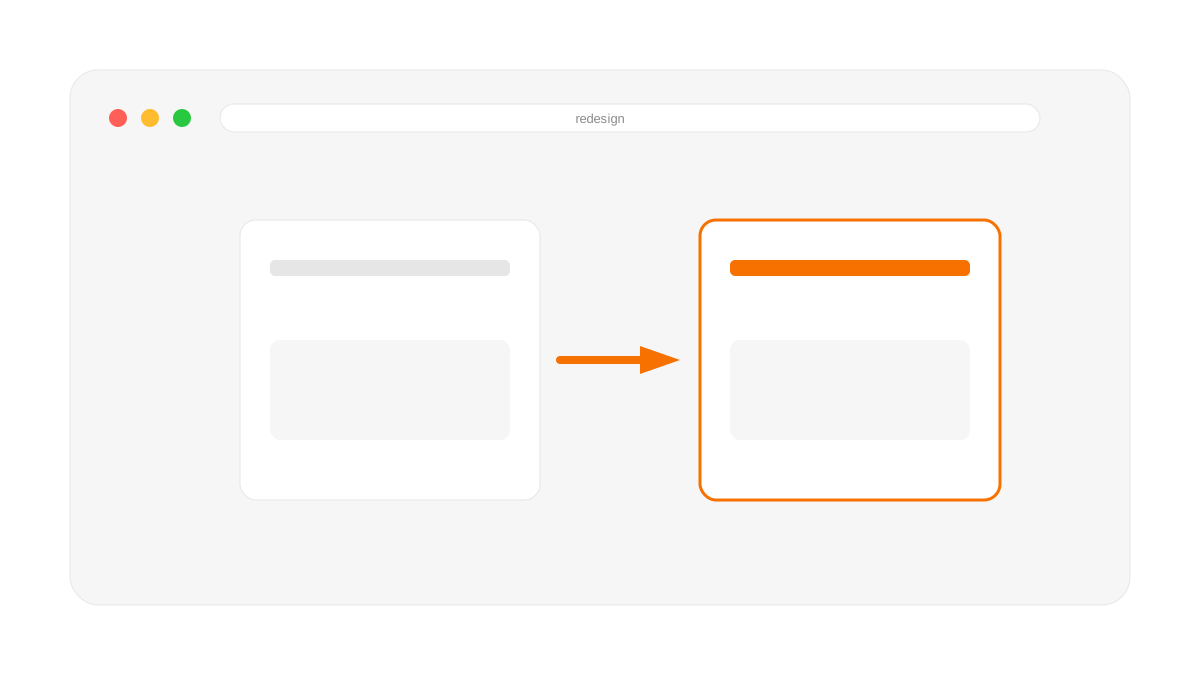
Before design starts, capture three things: a full crawl with URLs, titles, descriptions, and H1s; your top fifty pages by organic entry from Search Console or analytics; and your current conversion paths — which pages actually precede a form fill or a booking. That third one is the most often skipped and the most valuable, because it stops you redesigning the page that quietly does the work.
Decide the hierarchy from data, not from taste
The instinct in a redesign is to reorganise navigation around how the business thinks about itself. Customers do not think that way, and your analytics already know it. If a page nobody in the company respects is bringing in a third of your qualified traffic, it does not get demoted three clicks deep because it does not fit the new structure.
Where the data says nothing — genuinely new pages, new positioning — use judgement freely. Where it says something, listen to it.
Keep the URLs unless there is a reason
URL changes should be earned, not defaulted to. A URL that is ugly but ranking is worth more than a URL that is elegant and new. If you do change one, redirect the old path to the specific new page — never to the homepage — and flatten any chains created by redirects that already existed.
Carry metadata across deliberately
Export every title and description from the old site, and place them into the new one page by page. Then diff the new crawl against the old export and look at every difference. Some differences will be improvements you intended. The rest are the ones that cost you, and you will not notice them any other way.
Redesign the conversion path on purpose
The conversion improvement in a redesign should be designed, not hoped for. In practice this means deciding, per page, what the single next action is, and making sure the path to it is shorter than it was. A homepage with six equally weighted calls to action converts worse than one with a clear primary and a quiet secondary, no matter how much better it looks.
Also worth checking: form length, whether the booking step opens in a modal that mobile users abandon, and whether the pricing page answers the objection people actually have. Those three change numbers more than any hero animation.
Launch, then verify
Framer has a built-in way to do this without touching the live domain: Staging & Versions. Assign a specific version to your custom domain while the base .framer.website address keeps tracking your latest edits — that base domain becomes your real-world preview. Run the baseline crawl against it, check redirects fire correctly, and only then point the custom domain at that version. It turns "launch and hope" into a step you can actually undo.
Crawl the new site the day it goes live and compare against the baseline. Check for 404s, changed titles, missing descriptions, heading order regressions, and internal links still pointing at old paths. Then watch Search Console coverage for two weeks — most migration damage shows up there before it shows up in traffic.
What to do next
If you are planning a redesign, do the baseline crawl this week, before any design decisions get made — it is the cheapest insurance in the project. The design service page covers how I run these, and the website health scorecard will tell you whether a redesign is actually your highest-value move or whether something cheaper would do more.
WORKING ON THIS RIGHT NOW?
I run this exact process for US and EU teams — design, build, migration and the SEO work afterwards. Fixed quote in writing within three days.
NEED MORE INFO?
Frequently asked questions
Why do redesigns lose traffic?
Changed URLs without redirects, metadata regenerated from templates, shorter copy on pages that ranked because of that copy, and internal links collapsing into navigation. Almost never because the design got worse.
Should I change my URLs in a redesign?
Only when there is a reason beyond tidiness. A URL that is ugly but ranking is worth more than one that is elegant and new. If you do change it, redirect to the specific new page, never the homepage.
What should I record before starting?
A full crawl with URLs, titles, descriptions and H1s; your top fifty organic landing pages; and your actual conversion paths. The third is most often skipped and stops you demoting the page that quietly does the work.



Founder-led Framer studio by Zakir Ullah — Official Framer Expert & Creator. Design, build, migrate, maintain and grow — led by Zakir from strategy through delivery.
Other
Powered by @Framer
Get 3 Months Framer Free
Let's Connect on Contra
Hire Me on Contra
Ask AI about Framerfry